
Can Mold Grow Under Carpet? How Professional Mold Detection Finds Hidden Moisture Problems
Carpet can make a home feel warm, comfortable, and quiet. Unfortunately, it can also hide moisture problems that are easy to miss.
Mold does not need to grow on top of your carpet where you can see it. It can develop underneath the carpet, inside the padding, along the subfloor, or near the baseboards. By the time you notice a musty smell or discoloration, the problem may have already spread.
Professional mold detection can help homeowners find hidden moisture and possible mold growth before the problem becomes larger. If you have had a leak, flooding, high humidity, or unexplained odors, checking underneath your carpet may be an important step.
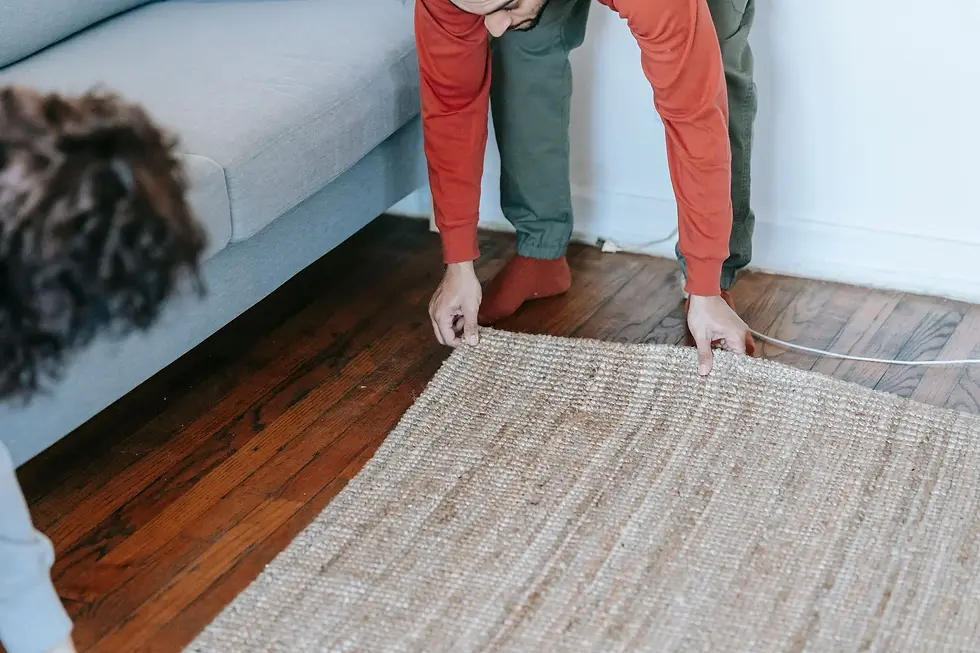
Why Mold Can Grow Under Carpet
Mold needs moisture and organic material to grow. Carpet and carpet padding can provide the right environment when they become wet and stay damp.
Water can reach the area under your carpet in many ways. A leaking pipe, overflowing sink, broken appliance, roof leak, or flooded room can soak the carpet without fully drying underneath.
Common causes of moisture under carpet include:
Plumbing leaks behind walls
Water from a leaking dishwasher or refrigerator
Basement flooding
Roof or window leaks
High indoor humidity
Wet shoes or repeated water exposure
Air conditioning problems
Water damage that was not dried correctly
The top of the carpet may feel dry even when the padding underneath is still holding moisture. This is one reason hidden mold can be difficult for homeowners to find on their own.
Signs You May Have Mold Under Your Carpet
Visible mold is one possible warning sign, but it is not the only one.
One of the biggest clues is a musty or earthy smell that does not go away. You may notice the odor more strongly when you enter a room, move furniture, or get close to the floor.
You might also see dark spots, stains, or changes in the carpet's color.
Other signs may include:
Carpet that feels damp or unusually cool
Water stains near walls or baseboards
Bubbling or damaged flooring
A musty smell in one room
Previous water damage in the area
Carpet padding that feels wet
Moisture around windows or exterior walls
Discoloration appearing near the edge of the carpet
Sometimes there may be no obvious signs at all. For example, a slow plumbing leak inside a wall can allow water to travel underneath carpet for weeks before anyone notices it. That is where professional mold detection becomes helpful.
How Professional Mold Detection Finds Hidden Problems
Looking at the carpet alone does not always tell you what is happening underneath it.
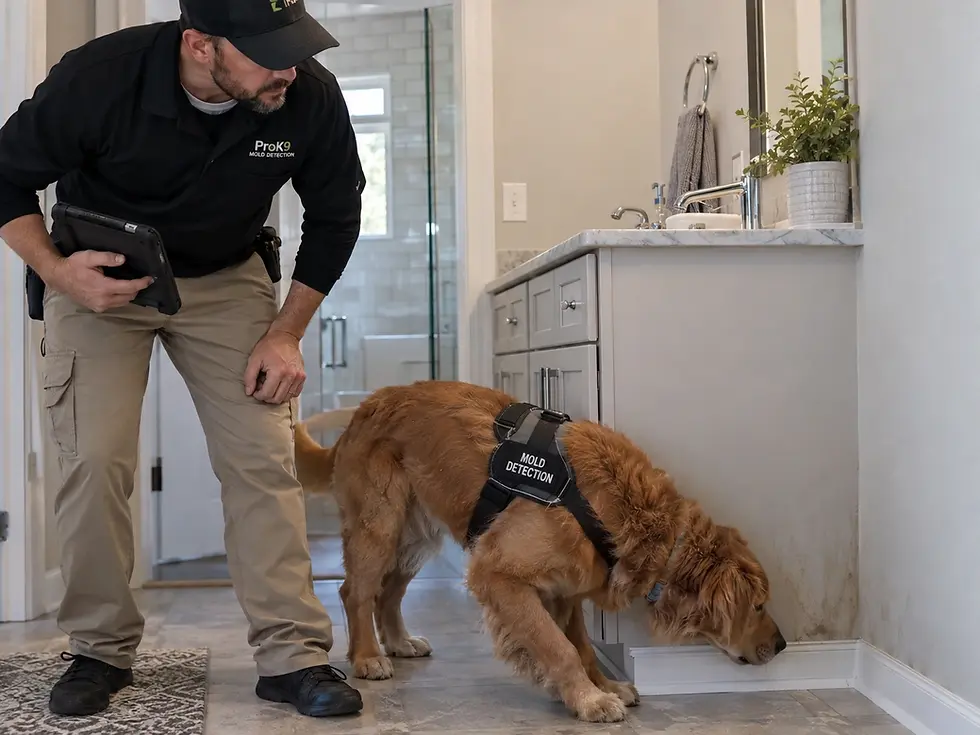
A professional mold inspection looks at the larger moisture picture inside the home. The goal is to identify areas where moisture may be collecting and determine whether further investigation is needed.
Inspectors may check areas around walls, flooring, plumbing, windows, bathrooms, kitchens, basements, and other locations where moisture problems are common. Moisture detection equipment can also help identify damp areas that may not be obvious by touch.
This is especially useful after a water event. Imagine that your washing machine leaked across a laundry room. You cleaned the visible water, dried the carpet, and everything looked normal again.
But some water may have traveled underneath the carpet into another room.
The surface could dry quickly while moisture remains trapped in the padding.
Professional mold detection helps locate these types of hidden areas so homeowners know where additional inspection or testing may be needed.
When Mold Testing May Be Helpful
A mold inspection and mold testing are related, but they are not exactly the same.
An inspection focuses on identifying signs of moisture, water damage, and possible mold growth. Mold testing may involve collecting samples that can provide more information about mold that may be present.
Testing may be recommended when mold is suspected but cannot easily be seen.
It may also be helpful when:
There is a strong musty smell with no visible source
A home recently experienced water damage
You are buying a home with a history of leaks
Mold was previously removed
Moisture keeps returning to the same area
You suspect mold underneath flooring or carpet
Not every situation requires the exact same approach. A professional evaluation can help determine what type of inspection or testing makes sense for your property.
Don't Ignore Moisture Under Your Carpet
A small wet area may seem harmless, especially if the carpet dries quickly. The bigger concern is what may be happening underneath the surface.
Moisture trapped inside carpet padding or underneath flooring can remain hidden for much longer than homeowners realize. Ignoring the problem can allow mold growth to spread into nearby materials, including baseboards, drywall, wood, and flooring.
If you recently had a leak or water problem, pay attention to unusual smells, stains, or damp areas. And if something does not seem right, getting the area checked can give you a clearer picture of what is happening.
The Mold Mutts can help homeowners identify hidden moisture and possible mold problems through professional mold detection and inspection services. Finding the source early can help you understand the problem and decide what steps should come next.
If you suspect mold may be hiding underneath your carpet, schedule an inspection with The Mold Mutts and get answers before a hidden moisture problem becomes a much bigger one.


Comments