
Mold Inspection After a Plumbing Leak: Why Waiting Could Make the Problem Worse
A plumbing leak can seem like a simple problem at first. You find the leak, stop the water, dry the floor, and move on. But moisture can travel much farther than you can see. Water may soak into drywall, flooring, insulation, cabinets, and other hidden areas of your home.
That is why scheduling a mold inspection after a plumbing leak can be an important next step.
Even when everything looks dry on the surface, moisture may still be trapped behind walls or under floors. If those areas stay damp, mold may begin growing without obvious signs.
Finding the problem early can help you understand what is happening inside your home before a small leak turns into a much larger cleanup project.
Why Plumbing Leaks Can Lead to Hidden Mold
Mold needs moisture to grow. A plumbing leak can provide that moisture quickly.
Some leaks are easy to notice. A broken pipe may send water across the floor. Other leaks happen slowly behind walls, beneath sinks, around toilets, or inside cabinets.
By the time you notice the problem, water may have already reached building materials that are difficult to dry.
Common places moisture can hide after a plumbing leak include:
Behind drywall
Under carpet or flooring
Inside kitchen and bathroom cabinets
Around baseboards
Beneath sinks
Behind toilets and showers
Inside wall cavities
Around damaged insulation
Materials like drywall, wood, and carpet padding can absorb water. The outside may feel dry while moisture remains deeper inside.
This is one reason simply cleaning up visible water may not always solve the entire problem.
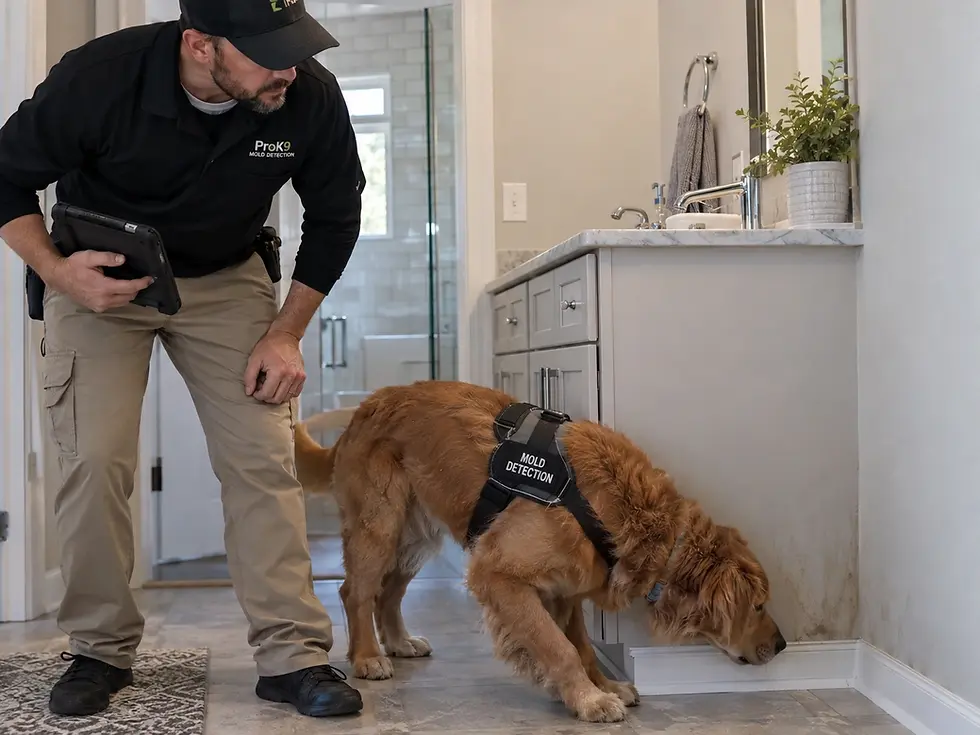
Why Waiting for Visible Mold Can Be a Mistake
Many homeowners believe they only need a mold inspection when they can actually see mold.
Unfortunately, mold does not always grow where you can easily find it.
It may begin behind a wall, underneath flooring, or inside another hidden area. You might not see anything unusual until the problem has had more time to spread.
There may also be other warning signs. You may notice a musty odor near the area where the leak happened. Paint might begin bubbling or peeling. Drywall can become soft or discolored. Flooring may warp or lift.
Sometimes there are no obvious signs at all. A professional mold inspection looks beyond what is visible on the surface. The goal is to find areas that may deserve closer attention before damage becomes easier to see and more difficult to manage.
The sooner hidden moisture is discovered, the sooner you can decide what needs to happen next.
What Happens During a Mold Inspection After a Leak?
A mold inspection helps evaluate areas that may have been affected by water.
The inspector will usually begin by learning where the plumbing problem occurred and how much water was involved. Knowing when the leak started and how long the area remained wet can also help guide the inspection.
The surrounding areas can then be checked for signs of moisture or possible mold activity.
Depending on the situation, the inspection may include:
Looking closely at walls, floors, ceilings, and cabinets
Checking areas near the original leak
Looking for water stains or damaged materials
Checking for musty odors
Identifying places where moisture may have traveled
Recommending mold testing when more information is needed
The important thing is that the inspection focuses on more than the obvious wet spot.
Water can move through cracks, seams, flooring materials, and wall cavities. The place where you noticed the leak may not be the only area affected.
A detailed inspection can help create a clearer picture of what happened.
Mold Testing Can Help When the Answer Is Not Clear
Sometimes an inspection finds an area that looks suspicious, but more information is needed.
That is where professional mold testing may help.
Testing can be useful when mold is suspected but cannot easily be seen. It may also help homeowners better understand conditions inside the property when there has been a past moisture problem.
Mold testing should not replace finding the moisture source. If a pipe is still leaking, fixing the leak must remain a priority.
Instead, testing can be one part of a larger mold detection process.
The goal is to understand the situation so you can make informed decisions instead of guessing.
This can be especially helpful after leaks involving:
Washing machines
Dishwashers
Water heaters
Refrigerators
Bathroom plumbing
Kitchen sinks
Toilets
Pipes inside walls
Even a slow leak from one of these areas can expose building materials to moisture for days or weeks before the problem becomes obvious.
Catching the Problem Early Can Save You Trouble Later
After discovering a leak, it is tempting to assume the problem is finished once the water disappears. But the visible water is only part of the story. Hidden moisture may remain behind surfaces where airflow is limited. If those materials do not dry properly, mold may have an opportunity to grow.
Acting early can make the next steps much easier. If you recently had a plumbing leak, pay attention to changes around the affected area. Watch for unusual odors, discoloration, warped materials, peeling paint, or areas that still feel damp.
More importantly, do not rely only on what you can see.
A professional mold inspection can help determine whether moisture traveled beyond the area you originally noticed.
Get Answers Before a Small Leak Becomes a Bigger Concern
A plumbing leak is stressful enough without wondering what might be hiding behind your walls or underneath your floors.
The Mold Mutts helps homeowners investigate possible mold and moisture concerns through professional mold inspection, mold testing, and mold detection.
If your home recently experienced a plumbing leak, getting the area checked sooner can help you understand the situation and decide what to do next.
Instead of waiting for visible mold to appear, take action while the problem may still be easier to address.
Contact The Mold Mutts today to schedule a professional mold inspection and get clearer answers about what may be happening inside your home.


Comments